


Allentown - Morning Call
3.1149.00 Reviews
App Specs
- Version
- 10.0.60
- Updated On
- License
- Free
- Downloads
- 10,000+
- Developer
- Tribune Publishing Inc.
- Categories
- News & Magazines
- Platform
- Android
Screenshots
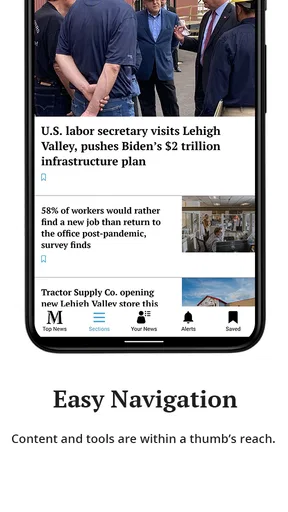
 Analysis by AppCompare
I opened Allentown - Morning Call expecting a focused way to keep up with local news rather than another broad national headline feed. That is the right starting point for this app: it belongs to the News & Magazines category, comes from Tribune Publishing Inc., and is aimed at readers who want Allentown-area coverage close at hand. My overall impression is that it can fit naturally into a daily news routine, but it works best when I treat it as a local publication companion, not as a complete replacement for every source of information.
The app is free to install and is rated for Everyone, which makes the basic entry point approachable for a household with different kinds of readers. Its average rating is 3.1 from around 310 ratings, so the public response is mixed rather than overwhelmingly enthusiastic. I think that is a useful warning: the idea is appealing, but a reader should judge the experience by how well it fits their own local-news habits, device, and willingness to encounter paid content.
From wanting local news to building a useful reading routine
I find it useful to begin with the reason I reached for a local-news app at all: I want nearby reporting to become part of an ordinary day, not another feed I check once and forget. This section looks at how a focused publication can support that habit, while keeping expectations realistic about what local coverage can answer. From there, I can consider how to make each visit more deliberate and useful.
Starting with a specific need
The most convincing use case is a person who starts the day wanting to know what is happening nearby. Maybe I am checking the morning news before work, looking for community developments, or trying to understand a local issue that national apps only mention in passing. In that situation, a publication-focused app has an advantage over a general news aggregator: I begin with a local editorial destination instead of sorting through unrelated headlines.
The store’s short description is simply “Allentown,” which tells me the app’s identity is deliberately narrow. That narrowness is a strength when I want regional relevance, but it also sets a boundary. I would not install it expecting a broad international briefing, a personalized collection from many publishers, or a replacement for a dedicated breaking-news service. Its value comes from local focus, not from trying to cover everything.
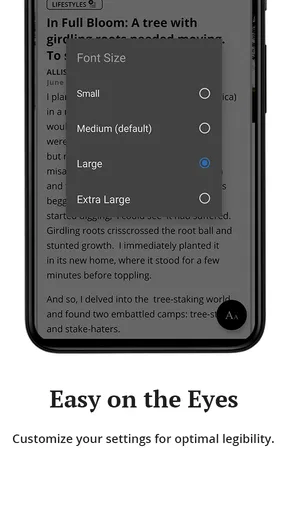
I also found the app’s positioning interesting because it is presented as a re-imagined experience for different screen sizes. That matters in practical use. A local newspaper app needs to remain readable when I move from a phone during a commute to a larger screen at home. The promise is less about adding noise and more about making the same publication easier to approach in different situations.
The first reading pass
My sensible workflow would be to open the app with one question in mind: what has changed locally since I last checked? I would scan the available news presentation first, then open only the items that affect my interests. That approach is more efficient than treating every headline as an obligation. Local news can include a wide mix of public affairs, neighborhood developments, events, and general reporting, so a quick scan helps me decide where my attention is worth spending.
Worth Reading Before You Choose

EA SPORTS FC Mobile 26 Is a Bigger Football Game, but It Takes Time

Flipboard Shows What News Apps Must Do Beyond the Feed

Switching to Android Auto Means Rethinking Your Driving Routine

Google Calendar Makes a Crowded Week Easier to Manage

Ludo King Makes the Most of the Minutes Between Plans

Baby Panda World Brings Quick Play to Modern Phones, but Its Game Library Feels Busy
On a phone, I would use short sessions: check the main presentation, read one or two relevant stories, and leave. On a larger display, I would be more likely to settle in and read several pieces. This is one of the app’s practical trade-offs. A screen-size-aware redesign can make the publication feel more comfortable, but comfort does not automatically make the content more personalized. I still have to do the selecting.
That is where the app differs from a typical algorithmic news feed. A general aggregator may learn that I like technology, sports, or business and continually mix those subjects together. Allentown - Morning Call instead makes more sense for someone who values a consistent local source. I may see fewer surprises, but I also spend less time filtering out stories that have no connection to the area I care about.
Following a story instead of just sampling headlines
A useful habit is to treat the app as a place for continuity. If I notice a local issue developing, I can return to the publication rather than relying on a single social-media post or a headline copied elsewhere. That does not mean every visit will produce a new answer, but it gives me a stable destination for checking the subject again.
This workflow is especially helpful before making a small everyday decision. For example, I might hear about a change affecting a local institution, see a discussion about a community problem, or want context around something happening in the area. I would open the app, scan the current local coverage, read the most relevant report, and then decide whether I need to follow up through an official source. The app becomes the discovery and context step, while official websites or direct communication remain better for final confirmation when the decision is important.
That handoff is easy to overlook. A news app can inform me, but it should not be my only authority for time-sensitive instructions, formal notices, or personal matters. The strongest workflow is therefore not “open the app and accept everything.” It is “use the app to understand what deserves attention, then verify critical details at the source responsible for them.”
Moving between reading contexts
The redesigned presentation for various screen sizes is most valuable when my reading context changes during the day. I might begin with a quick phone check, continue reading on a larger screen, and return later for another look. A publication app feels more useful when it supports that change without making the content feel cramped or awkward.
There is also a psychological benefit to a publication-specific space. Social feeds encourage rapid switching between topics and often place the most emotional item first. A local newspaper app gives me a clearer reason for opening it. I am there to read local reporting, not to wander through an endless stream. For readers who find general feeds distracting, that focus may be more important than advanced personalization.
At the same time, I would not confuse a cleaner destination with a frictionless one. The app is free to download, but in-app purchases range from $4.99 to $199.99 per item. That makes the access model something I would pay attention to before settling into a long-term routine. I would read the purchase wording carefully, especially if I am using the app casually and only want occasional articles.
Handoffs between the app, the reader, and payment
The most important handoff happens when ordinary reading meets restricted or premium content. I can begin with the free installation and explore the publication’s presentation, but a later step may involve an in-app purchase. That transition changes the decision from “Do I want to read this story?” to “Is this publication valuable enough for me to pay for continued access?” Those are different questions, and I would not answer the second one impulsively.
For a frequent local-news reader, a purchase may make sense if the app becomes part of a daily information routine. For someone who checks local coverage only once in a while, the cost structure could feel harder to justify. The right choice depends less on the presence of a purchase option and more on how often I actually return and whether the reporting is central to my needs.
I would also involve the person who ultimately controls purchases if the app is installed on a shared family device. The Everyone age rating makes the app broadly accessible, but age suitability and payment authorization are separate concerns. A child or guest may be able to open a news app while an adult should still handle any purchase decision. That is a small but realistic handoff in everyday use.
What the workflow produces
When the routine works, the result is not merely a list of headlines. I finish with a clearer sense of what deserves attention in the Allentown area and which stories I want to investigate further. That is a modest outcome, but it is useful. Local awareness often comes from repeated short visits rather than one dramatic reading session.
I would recommend the app most strongly to residents, former residents, and people with an ongoing connection to the area who prefer one recognizable local publication. It can also suit readers who want a focused alternative to a national news app and do not mind choosing stories manually. The local emphasis gives the experience a purpose that broad aggregators often lack.
The result is less impressive for someone who wants instant personalization, a large range of sources, or a single dashboard combining local, national, and international news. In those cases, a mainstream aggregator or a broader publication app may be more efficient. That is not a failure of this app; it is a reminder that a focused local product should be evaluated by the job it is meant to do.
Where the flow breaks
The first possible break is relevance. A reader may open the app wanting a very specific update and find that the current presentation does not immediately match that need. Local coverage is valuable, but it is still organized by the publication rather than by my personal question. If I need a narrow answer quickly, a direct search or official local source may be faster.
The second break is the difference between a redesigned interface and a genuinely modern reading experience. The current version is 10.0.60, and the app has been available since January 20, 2011, so it has had a long life and a substantial product history. That does not tell me how every device will behave, but it does suggest that readers should pay attention to how the current build feels on their own hardware rather than assuming the redesign will suit everyone equally.
The third break is the purchase boundary. Free installation lowers the barrier to trying the app, yet the listed in-app purchase range is wide enough that I would want to understand exactly what I am buying before confirming anything. A casual reader may feel interrupted at that point, while a committed local-news reader may see it as a reasonable exchange for continued access. The same mechanism can therefore be either a fair next step or the moment the app stops fitting the user’s needs.
Another limitation is that local focus can become a disadvantage when my attention moves elsewhere. If I am planning a trip, comparing national policy developments, or following a specialist subject, I would switch to a broader source. Keeping this app installed makes sense only if Allentown coverage is a recurring need. Otherwise, it risks becoming another icon I open occasionally without forming a habit.
Who should install it
I would start with this app if I wanted a direct connection to Allentown-area reporting, preferred a publication-centered experience, and liked the idea of reading across different screen sizes. The free entry point makes trying it straightforward, and the Everyone rating keeps it suitable for a broad audience. I would then spend a few ordinary days testing whether the available coverage actually fits my routine before considering any purchase.
I would skip it if my priority were a highly customized feed, many competing sources in one place, or a completely free reading experience with no purchase decisions. I would also choose another option if I needed official, real-time confirmation for an urgent matter. News coverage can provide context, but it should not replace the organization directly responsible for an emergency notice, schedule, rule, or service update.
My final take on the local-news workflow
Allentown - Morning Call is most successful as a focused local-news checkpoint. I can begin with a need for nearby information, scan the publication’s current coverage, read the stories that matter, and carry important details to the appropriate official source for confirmation. That workflow is practical, especially for readers who are tired of broad feeds that bury local reporting under unrelated headlines.
My recommendation is conditional rather than automatic. The app’s 3.1 average from around 310 ratings reflects a mixed reception, and the in-app purchase range means I would inspect the access path before committing. Still, for someone who genuinely follows Allentown news, the focused identity and screen-size-oriented redesign give it a clear reason to exist. I would try it for local awareness, keep my expectations centered on that purpose, and move to a broader alternative whenever my information needs outgrow the area it covers.
Pros
- Covers breaking news and local events across the Lehigh Valley.
- Includes sports coverage for regional teams and schools.
- Offers opinion pieces
- investigations
- and community-focused reporting.
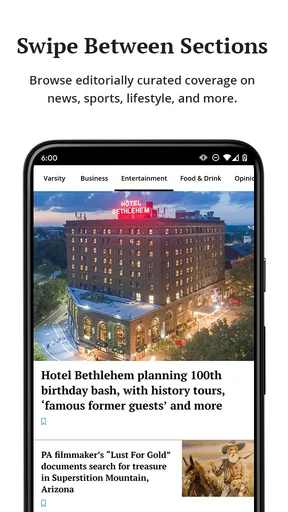
- Articles are generally easy to browse by topic and section.
- Useful for keeping up with local government and neighborhood issues.
Cons
- Some articles may be restricted by a digital subscription or paywall.
- Advertising can make parts of the app feel visually crowded.
- Push notifications may become frequent unless carefully customized.
- Coverage is primarily regional
- with limited value for users elsewhere.
- App performance and loading speed may vary with connection quality.
FAQs for Allentown - Morning Call
What is the Allentown - Morning Call app?
Allentown - Morning Call is a news app focused on Allentown, the Lehigh Valley, and surrounding Pennsylvania communities. It provides access to local reporting, breaking news, politics, sports, business, entertainment, weather, and other regional coverage from The Morning Call. The app is designed for readers who want to follow important local developments from a phone or tablet in a convenient format.
Is Allentown - Morning Call free to download and use?
The app can generally be downloaded at no cost, but access to all articles and premium features may depend on the publication’s subscription policy. Some stories may be available to everyone, while others can be limited to subscribers or require registration. Before downloading, users should review the current pricing, trial terms, and subscription conditions shown in the App Store or Google Play listing.
What type of news and features does the app provide?
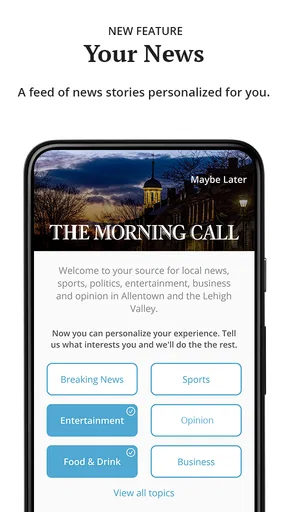
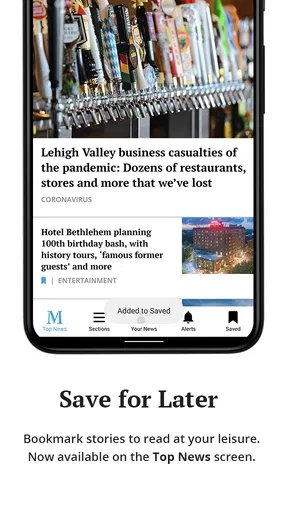
The application typically combines local and regional news with sections such as sports, weather, business, entertainment, opinion, and community updates. Depending on the current version, readers may also find breaking-news alerts, personalized notifications, saved articles, improved article layouts, photo galleries, and access to digital newspaper content. Available features can vary by device and subscription status.
Does the app require an account or subscription?
You may be able to browse selected content without creating an account, but an account is often needed to access subscriber-only stories, manage preferences, save articles, or use a digital subscription. A paid subscription may also be required after reaching a reading limit. Users should check the app’s sign-in options and subscription details carefully before confirming any recurring purchase.
Is Allentown - Morning Call worth downloading for local news?
The app is a useful choice for readers who want focused coverage of Allentown and the wider Lehigh Valley rather than relying only on national news platforms. Its main strengths are regional reporting, convenient mobile access, and timely updates. However, users who dislike subscription limits, advertisements, or notification prompts may prefer to review the free access available before committing to a subscription.


